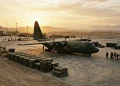
Pakistan has sent troops to Saudi Arabia under the Makkah defence pact, the army said on 29 November 2026, a move that puts a South Asian military on Gulf soil and matters to British Pakistani families with relatives in both countries.
Key points
- Pakistan’s army said on 29 November 2026 that troops were sent to Saudi Arabia after a send-off ceremony on 28 November.
- The deployment follows a meeting of the Makkah alliance’s defence committee in Islamabad on 27 November.
- The army did not say how many troops, where they will be based or how long they will stay.
- Pakistan, Saudi Arabia and Turkey call the pact defensive and not aimed at any country.
Why has Pakistan sent troops to Saudi Arabia?
Pakistan sent the troops to meet its collective defence commitment to Saudi Arabia, which has faced repeated attacks from Yemen’s Iran-aligned Houthi militants. According to the Pakistani military’s statement, as reported by Indian and Turkish outlets, the troops are there to protect the kingdom’s security and territorial integrity. Pakistan’s Defence Minister Khawaja Muhammad Asif and Saudi Ambassador Rajeh Al-Baqami attended the send-off on 28 November.
The deployment comes days after the alliance’s Strategic, Political and Defence Committee met in Islamabad. The Associated Press reported that Pakistan and Turkey pledged to support Riyadh against the Houthi attacks, and that Foreign Minister Ishaq Dar said the three sides backed Saudi Arabia in safeguarding its sovereignty.
What is the Makkah defence pact?
The Makkah Joint Defence Agreement is a three-way pact between Pakistan, Saudi Arabia and Turkey that treats an armed attack on one member as an attack on all. It was signed in August 2026 in the Saudi holy city by Prime Minister Shehbaz Sharif, Crown Prince Mohammed bin Salman and President Recep Tayyip Erdogan, and binds the parties for 10 years.
Its institutions have developed quickly. Arab News Pakistan reported that a permanent secretariat is being set up in Riyadh, with retired Pakistani Lieutenant General Nauman Mahmood as its first secretary-general. The three countries also agreed principles for admitting new members, although Turkey’s foreign minister Hakan Fidan named none.
Former Pakistani ambassador Maleeha Lodhi told Arab News the alliance showed regional security arrangements emerging outside the US-led system. Turkey has said it is considering military assistance but that no Turkish troops would fight in Yemen.
What does it mean for British Pakistanis and the UK?
For British Pakistani families, the main effect is concern about regional stability, travel and money sent home. Many have relatives in Pakistan and work or pilgrimage links to Saudi Arabia, including Umrah trips from Birmingham and other cities. Nothing in the announcements changes travel rules, but the Foreign, Commonwealth and Development Office publishes travel advice for each country and it is worth checking before any trip.
The UK is also involved diplomatically. Foreign Secretary Ed Miliband was named as a participant in a first meeting of Turkey, Egypt, Pakistan and Saudi Arabia with Germany, France and the UK, which Turkey described as a way to coordinate on regional crises. On 28 November 2026 the UK joined France, Canada, Australia and four other countries in calling for Palestinian elections in the first three months of 2027.
Pakistan has also positioned itself as a go-between in the wider Iran conflict. It brokered an interim US-Iran deal in June 2026 and has been urging both sides to return to talks, according to the AP.
What happens next?
The next milestones are details the army has not yet given: troop numbers, location and duration. Watch for statements from the alliance secretariat in Riyadh and from the Saudi-led coalition, which said on 29 November that it was carrying out a military response to Houthi attacks on civilians, according to Anadolu.
Analysts quoted by Arab News said the next phase must focus on financial, military and operational strength. For readers in the West Midlands with family links, the practical advice is to follow official travel guidance and treat early reports with care until the Pakistani and Saudi governments release more.
Background
The alliance first met in Istanbul on 31 August 2026 and held emergency talks in Riyadh on 5 October 2026.
The pact was agreed during heightened tension after the US-Israeli war on Iran, when Gulf states felt exposed to missile and drone attacks. Pakistan’s role has also reached UK headlines recently: we reported on the restoration of PIA flights to the UK, a key link for the community. More international coverage is on our World page, and our report on Bangladesh’s garment wage row covers another South Asian story with British links.