The Birmingham life expectancy gap is 10 years between the city’s poorest and most affluent areas, according to Birmingham City Council’s new Our Future City report, which also points to unemployment at double the national average and more than 40% of children growing up in relative poverty.
Key points
- The council’s Our Future City report records a 10-year life expectancy gap between Birmingham’s poorest and wealthiest areas.
- Life expectancy across the city is 78 for men and 83 for women, but it varies sharply by neighbourhood.
- Unemployment in Birmingham is double the national average, and the six worst youth jobless areas in England are all in the city.
- Former council leader John Cotton said over 40% of Birmingham’s children grow up in relative poverty.
What is the Birmingham life expectancy gap?
The Birmingham life expectancy gap is the difference of 10 years between how long people are expected to live in the city’s poorest neighbourhoods and in its most affluent ones. The figure comes from the Our Future City report, which Birmingham City Council published to set out a blueprint for the next two decades, as reported by Birmingham Live on 23 November 2026.
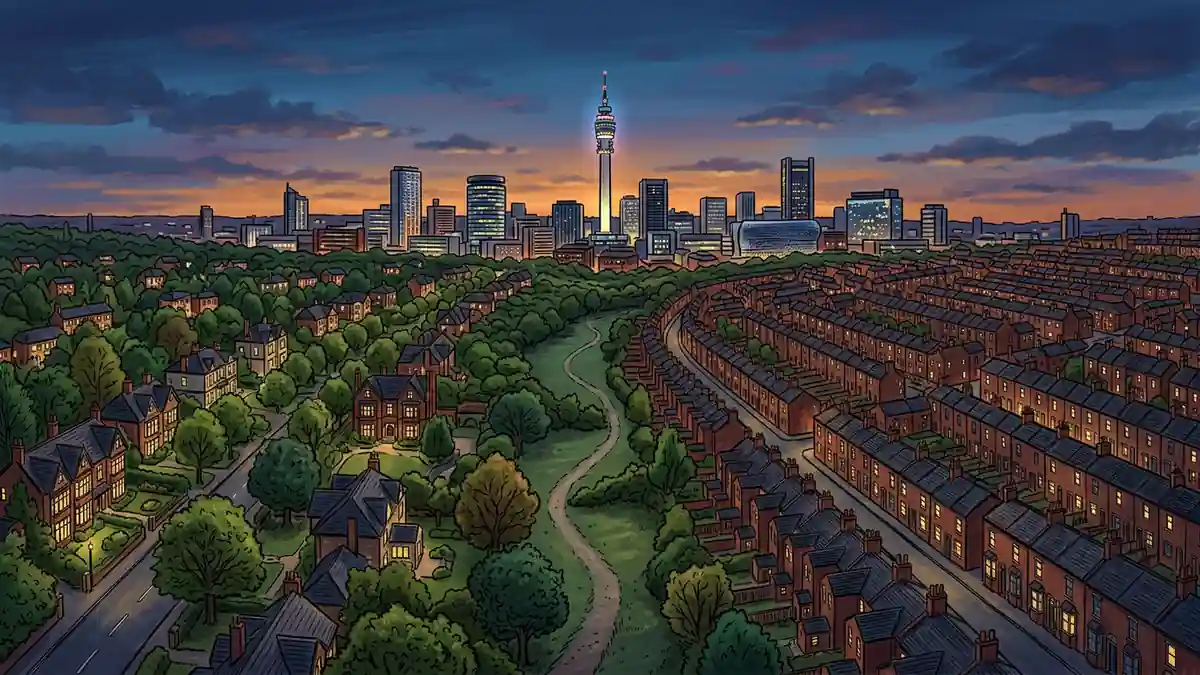
Overall, life expectancy in Birmingham is 78 for men and 83 for women. Those averages hide a wide spread. Areas such as Sparkhill are among the poorest, while Sutton Coldfield and Edgbaston are among the richest.
Where are the biggest gaps in jobs and income?
The biggest gaps sit in the same poorer areas that have the shortest life expectancy. The report says unemployment in Birmingham is double the national average, and that the pressure is weighted most heavily in the poorest parts of the city.
Youth unemployment is starker still. Birmingham Live reported on 21 November 2026 that the six areas of England with the worst youth jobless rates are all in Birmingham. Erdington is the worst of all, with one in six young people aged 16 to 24 out of work, according to constituency-level figures. Perry Barr, Yardley, and Hall Green and Moseley also feature among the worst rates.
The report’s foreword, written by former council leader John Cotton, called out child poverty. He said: “most shocking of all, over 40% of Birmingham’s children grow up in relative poverty”.
What does the Our Future City report propose?
The Our Future City report proposes a shared strategy built around homes, transport, green space, health facilities and skills. It describes itself as a collaborative effort between the council and its “civic family” of individuals, businesses and charities.
In his foreword, Mr Cotton said young citizens and families need high-quality homes they can afford, across a range of tenures and types. He added that new homes and neighbourhoods should come with better transport options, access to green spaces, health and community facilities, and the right social and digital infrastructure. Residents would also be equipped with the skills and training needed to reach the jobs to come.
He was clear about the limits of a plan on paper: “Vision alone will not transform the city or indeed the lives of our citizens. As ever, the key to success lies in delivery.”
Why does the gap matter beyond Birmingham?
It matters because the same pattern appears across England, and councils are being told to treat it as a priority. The Local Government Association published a guide for councillors on 18 November 2026 explaining that where you live in England shapes how long you live and how many of those years you spend in good health. It stresses that poor health also costs local economies jobs and productivity.
Birmingham is England’s second city, so progress or failure here affects a very large number of people. The city’s challenges are also tied to national policy. The Government has set out plans to reshape benefits for young people, and Birmingham’s youth jobless figures are central to that debate.
What it means for you
If you live in Birmingham, the report does not change services overnight. It is a long-term framework, and its impact will depend on funding and delivery by the council and its partners. Residents in the poorest areas are the ones most likely to see targeted action on housing, skills and jobs if the plan is followed through.
If you work in a local charity, business or health service, the report invites you to take part. It is explicitly designed as a shared effort, so partners are expected to help deliver it rather than watch from the sidelines.
For young people in areas such as Erdington, the most immediate change is more likely to come from national welfare and employment policy than from the council’s 20-year plan. The Milburn report, reported by Birmingham Live, said spending on benefits for young people is 25 times as much as spending on employment support, and argued that balance should shift.
Background
Birmingham City Council has seen leadership changes. Mr Cotton is described as the former leader in the latest coverage. The council has recently seen other changes at the top, including the departure of its government commissioners, and politics in the city remains closely contested, as the Shard End by-election result showed.
Birmingham Live updated its coverage of the report on 29 November 2026, summarising the 10-year gap, the jobless figures and Mr Cotton’s warning about child poverty.
What happens next
The next step is delivery. The report sets direction rather than binding targets in the coverage seen so far, so the test will be whether the council and its partners turn the vision into homes, jobs and transport in the areas that need them most. The 10-year gap will be the clearest measure of success, but it can only move slowly over many years.
We will follow how the plan develops. For more stories from across the country, see our National news section.