









The prime minister of the United Kingdom of Great Britain and Northern Ireland has spent the past week declaring war on headphone-dodgers, excessive car park fines and potholes. This somewhat unusual set of priorities has brought a recurring theme of Andy Burnham’s premiership into sharper focus.
Since crossing the threshold of Number 10 to assume office as first lord of the Treasury, Burnham has moved to vanquish VAT from electricity bills and restrain bus fares. “Loudcasting” – the practice of playing audio aloud in public – is the latest seemingly modest target for a government crackdown. The prime minister has also mobilised against so-called subscription traps, vaping and betting shops, branded school uniforms and airline seating charges for families.
These are hardly the grand questions of state that are usually associated with the premiership. But the strategy is highly revealing of Burnham’s brand of statecraft, his ambitions and anxieties.
In his first speech as prime minister, Burnham emphasised the need to give people “breathing space”. He has since prioritised immediate, relatively inexpensive measures to address the cost of living and the everyday irritations. Proclaiming his crusade on loudcasting, he explained: “It’s a simple thing, but one that will make journeys that little bit better for all of us.”
The programme has a clear political, even populist, edge. By addressing the simple frustrations that shape people’s experience of the state, Burnham is seeking to persuade an increasingly impatient public that he understands its concerns and is on its side. The significance of the small fixes lies less in any individual measure than in the cumulative signal that government can – and is trying to – make a difference. If nothing else, Burnham believes that such measures communicate his values to voters.
There are also secondary political benefits. The strategy aligns with Burnham’s more prominent social media presence, providing a steady stream of relatable, intelligible initiatives that travel well online. It also requires Number 10 to work with departments across Whitehall, giving secretaries of state a role in developing and publicising the government’s agenda. Towards the end of Keir Starmer’s premiership, a common complaint was that ministers felt neglected by Number 10.
The Conservative critique
The Conservatives have spent the week deriding Burnham’s focus on everyday irritations.
Kemi Badenoch mocked the government’s crackdown on loudcasting in her set-piece pre-budget speech on Tuesday. “It’s very easy to announce that you don’t like people making noise on trains. That is a job for ticket inspectors, not the prime minister”, she said.
“If Labour’s plan is to kick tough decisions into the long grass, come out with tiny bits of micro-policy, put up a few taxes, spend a bit more on welfare, and hope nobody notices before the next election, they are kidding themselves.”
Responding to Burnham’s parking fines policy, shadow minister Rebecca Smith asked bluntly: “Is this for real? Is he the prime minister or the councillor in charge of car parks?”
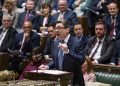
Badenoch returned to this theme at prime minister’s questions (PMQs). “The prime minister is worrying about loud music on trains. This is not serious. The only solution to the challenges facing our country is to cut spending and cut borrowing.”
This commentary is consistent with Badenoch’s combative and uncompromising approach to opposition. It may also serve a wider strategy to portray Burnham as burdened with the mindset of a mayor, preoccupied with obscure concerns, petty grievances and piecemeal policy. The Conservative case is that a succession of small announcements cannot substitute for decisions on the economy, public services or the country’s long-term direction. Badenoch is entitled to question whether these interventions amount to a coherent programme of government. But her response comes with its own risks.
Voters do not share Westminster’s sense of scale. On the parliamentary estate, politics is seen through the prism of national economic strategy and the government’s long-term direction. But voters experience government in different ways, usually through everyday encounters with prices, public services and institutions. Burnham’s micro-policy blitz is designed to address the little dysfunctions that fuel public disillusionment.
Badenoch’s response risks sending the inverse signal. By dismissing these measures as trivial, the Conservatives are in danger of demonstrating a degree of detachment from the problems Burnham has identified. At least, this could represent a misreading of the public mood. At worst, it could reinforce the perception that the party struggles to understand voters’ everyday concerns – a brand weakness Labour is ever keen to exploit.
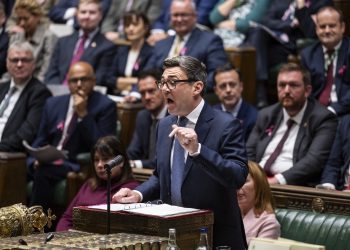
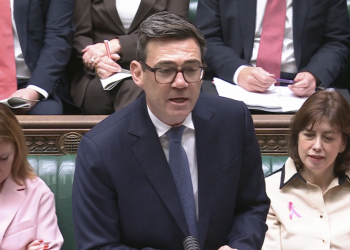
Burnham relished the opportunity to punish Badenoch’s line of argument at PMQs. “I am not going to apologise for doing the small things that help people have better lives”, the prime minister thundered.
Sweating the small stuff
Whatever Burnham gains from Badenoch’s objections, the bigger political prize is establishing a sense of responsiveness and movement for his government. The contrast with Keir Starmer – particularly his approach during his first 100 days as prime minister – is instructive.
After the 2024 general election returned Labour to government, Starmer prepared voters for a period of sacrifice. In his first keynote speech as prime minister in August 2024, he warned frankly that “things will get worse before we get better”. At the same time, Starmer spoke loosely about structural transformation, referring variously to his “missions” in government, milestones, first steps and foundations. The promised change remained largely abstract – but the sacrifices were tangible.
More in Common’s policy tracker, which measures cut-through and public approval, shows how differently Burnham and Starmer’s opening salvos landed. In Starmer’s first 100 days, the measures voters knew best were simultaneously the least popular. The winter fuel cut (about 87% aware, net rating about -57), early prisoner releases (about 84%, -50), the changes to inheritance tax for family farms (about 85%, -45) and the bus fare cap increase (about 80% aware, -40) all attracted strongly negative ratings.
Burnham’s first two months show the reverse. This data, published at the end of September, showed his £2 bus fare cap was both the best known (about 86% aware) and the most popular (net +66) policy, followed by scrapping VAT on energy bills (about 78% aware, +62). Roughly two-thirds of the measures tested, including the pub business rates cut, ending rough sleeping and scrapping digital ID, sat above +35. The one clear exception is the early prisoner release scheme (about 84%, -24). Even there, the reaction is far milder than the -50 recorded under Starmer.
Burnham's opening salvo has been highly popular and demonstrated “trying”. Unlike Keir Starmer's unpopular early policies, his cost of living interventions – above all the £2 bus fare cap, heard of by four in five Britons – have been popular and well publicised.
— Luke Tryl (@luketryl.bsky.social) 2026-09-29T09:59:01.154Z
Importantly, Burnham’s blitz has helped his government establish a political identity on its own terms. This may explain why his conference-speech commitment to adjust the triple lock – previously seen as politically unassailable – has not provoked a backlash on the scale of Starmer’s winter fuel debacle. A succession of policies signalling change, designed to secure strong cut-through, provided protection against one potentially unpopular decision defining the government’s wider agenda.
Simply put, a government that is seen to be addressing people’s everyday concerns has more room to manoeuvre when it comes to difficult decisions. Starmer’s experience is again instructive.
As Starmer’s government was increasingly defined by diplomatic challenges, the prime minister’s prominence on the international stage – rightly or wrongly – emerged as a political liability. Voters were invited to question his commitment to domestic improvements. This arguably presented a false choice between the two, forcing the government to oscillate between the foreign and home fronts in an attempt to correct the perceived imbalance.
Burnham’s approach suggests a way out. By keeping his government visibly engaged with the everyday concerns of voters, he can create the political space to pursue larger ambitions without appearing detached from life at home. The approach may mean that when Burnham does embark on more abstract projects – including on Europe and electoral reform – or spends extended periods addressing foreign policy, voters will be more inclined to trust his intentions.
The groundwork laid by “small fixes” is not a distraction from the bigger questions of statecraft. At a time of impatience for change and disillusionment with politics, it is central to a government’s ability to tackle them – a necessary first step.
Building credibility
Prime ministers must treat symptoms as well as the disease. Burnham’s small fixes strategy is designed, in part, to build the credibility that will see the government move to structural reform.
More in Common director Luke Tryl has identified three tests facing Burnham’s government in the eyes of the public: do voters think the government “gets it”? Are they trying? And can they deliver real change?
Burnham’s interventions are intended to answer the first two points. But questions remain about his ability to deliver on the all-important third measure. Burnham sought to define his long-term vision for Britain with his sweeping address to Labour conference; the budget will be another key test, as will future flashpoints over immigration and welfare.
Small fixes have helped earn Labour a rehearing. The challenge now is to turn a succession of popular interventions into lasting confidence in Burnham’s ability to govern. That, ultimately, will depend on the government making progress on the big questions about Britain’s future.
The post Burnham’s ‘small fixes’ could go a long way appeared first on Politics.co.uk.