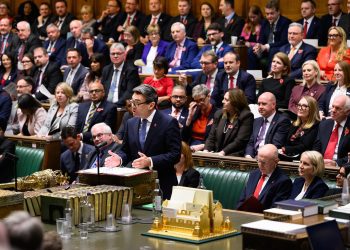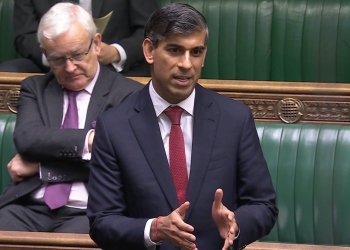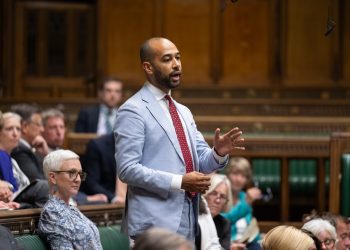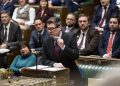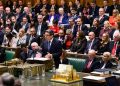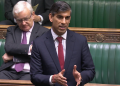















Prime minister’s questions today was one of those rare sessions when the most revealing exchange came after the leader of the opposition, Kemi Badenoch, returned to her seat on the Conservative frontbench.
Badenoch devoted her six questions to welfare reform, seizing on the publication of the Milburn review into young people and work yesterday. The Conservative leader has a habit of opening her exchange with Burnham with a short question, in a likely ploy to catch the prime minister off guard.
“Will the prime minister cut welfare in this parliament?” she asked. Burnham mostly declined the opportunity to deliver a direct answer, promising instead to do “everything that I can as quickly as possible to get the welfare bill down”.
The prime minister went on to pay tribute to Alan Milburn, the former health secretary, for penning a “landmark report that will change the way we think about the coming generation and give them the support they need to get on in life”.
Badenoch was unimpressed. “I asked him if he was going to cut the welfare bill this parliament. I think it sounds very clearly like he is not,” she replied.
What followed was a largely familiar restatement of the Labour-Conservative divide that has developed on welfare since Burnham’s appointment as prime minister. Both leaders showed the strengths and vulnerabilities of their respective positions.
Badenoch repeated her description of Labour as the “welfare party”, but her most effective attack came in her characterisation of the government’s approach: “What he wants is the vibes of welfare reform without actually doing any welfare reform.” It was a pointed application of a longstanding Conservative criticism of Burnham’s premiership – that it is all “vibes” and little substance – to the specific question of welfare.
Burnham’s performance benefited from a clear argument on reform. He framed welfare as a moral question about young people’s prospects rather than spending cuts.
Blair faces first major rebellion as 47 Labour MPs oppose lone parent benefit cuts
“She reveals time and time again when she comes to that dispatch box why she doesn’t understand this issue”, the prime minister stated, “because she only ever stands at that dispatch box asking for cuts. That’s all she ever asks for.”
Burnham called for “humility” from the Conservatives on the NEET (not in education, employment or training) question. “We will not accept, time and again, [Badenoch] coming to this House, saying that they are going to bring down the welfare bill, but fail to support our young people”, he declared.
“They slashed youth services when they were in government. They cut the education maintenance allowance. They trebled tuition fees. They took hope from a generation; we will give it back to them.”
Burnham at #PMQs: “We will not accept [Badenoch] saying that we are going to bring down the welfare bill, but fail to support our young people. “They slashed youth services when they were in government. They trebled tuition fees. They took hope from a generation and we will give it back to them.”
Probably the central difference between Burnham and his predecessor as prime minister, Keir Starmer, is that the incumbent appears at his most comfortable when making an argument. Starmer seemed reluctant to make a broader, more abstract case for his programme, wary of where it might lead him or how it could expose him to attacks from his opponents. Burnham, by contrast, is more inclined to follow an argument, trusting his political instincts to find his way through a debate.
The clearest example is his stance on Brexit, which, more than any other issue, is providing the political impetus behind his premiership.
Burnham had to wait until Ed Davey, the Liberal Democrat leader, raised the subject to make his case in full. He seized on the opportunity once it presented itself.
“Halloween may be over”, Davey began, “but the Vote Leave zombies are out in force. Boris Johnson staggering back, denying the enormous damage to our economy and the cost of living from the Conservatives’ Brexit deal, Dominic Cummings and Lord Gove trying to scare us with a new made-up number, no doubt coming soon to the side of a bus.”
Ed Davey at #PMQs: “Halloween may be over, but the Vote Leave zombies are out in force.“Boris Johnson staggering back, denying the enormous damage to our economy from the Conservative Brexit deal, Dominic Cummings trying to scare us with a new made-up number.”
Burnham turned to the benches opposite. “I think we heard from some of those zombies just before. They were shouting at me. But the truth is, they don’t like it when we say the truth in this House. The truth is, the Brexit deal that they negotiated wasn’t good enough for Britain.
“It’s just a fact, and the vast majority of the public know that.”
He stated: “They burned bridges with our largest market, old friends and neighbours – they just destroyed all of those relationships. Exports are down from their constituencies, and they know that.”
The prime minister said he was looking for support “across the floor of this House” for the Brexit plan he will unveil at the UK-EU summit on Friday.
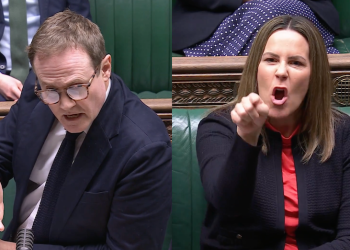
This drew a retort from a sedentary shadow cabinet minister.
Burnham was quick to turn the intervention to his advantage. “Yes, I am”, he said, “because it can bring growth to the British economy. It can lower the cost of the weekly shop. It can get greater collaboration back on immigration. It’s time they faced up to these facts.”
Earlier this week, Burnham set out his approach to UK-EU relations in a speech to the Lord Mayor’s Banquet. In this address, he argued the global drift towards isolationism, which he traced back to the Brexit referendum in 2016, was “exactly what our enemies wanted”.
Brexit isolationism is ‘exactly what our enemies wanted’, Burnham says
Burnham had attempted to bring this argument into his exchanges with Badenoch at the dispatch box. Responding to her claims about the lack of available jobs, he broadened the discussion to the economic consequences of leaving the EU, challenging the Conservatives to defend the settlement they had negotiated and their opposition to closer ties.
The prime minister argued that “the deal that’s on the table will bring growth to the British economy. It will reduce red tape from businesses. It will cut the cost of exporting to Europe, and critically, it will bring food prices down.”
MPs fail to find majority for any Brexit option in ‘indicative votes’
Badenoch did not engage with the substance of this point, as she often does when responding from the opposition dispatch box, instead returning to her line of questioning on welfare.
Some Conservatives have begun to mount a defence of Brexit. Vote Leave veterans have regrouped under the Stay Out banner, with Gove’s backing. Conservative MP Bernard Jenkin has argued the case in these pages. Badenoch, however, has yet to embrace that position with similar enthusiasm, and once again declined to engage the prime minister on Brexit today. And so Burnham has been allowed to set the terms of the argument.
Labour is not entirely at one with Burnham’s direction of travel on Brexit. But he chose to reopen the debate partly because he calculates that the battle will cause more trouble for his opponents than for his government. Today’s exchange suggests the calculation may have some merit.
Burnham’s case for rejoining the EU rests on invented narratives, not facts
The post PMQs verdict: Burnham takes on the Brexit ‘zombies’ appeared first on Politics.co.uk.