












Kent studio Dovetail Games was the biggest winner at the UK games industry’s TIGA Awards this week, collecting four prizes, while IO Interactive’s 007 First Light was voted Game of the Year by the guests in the room.
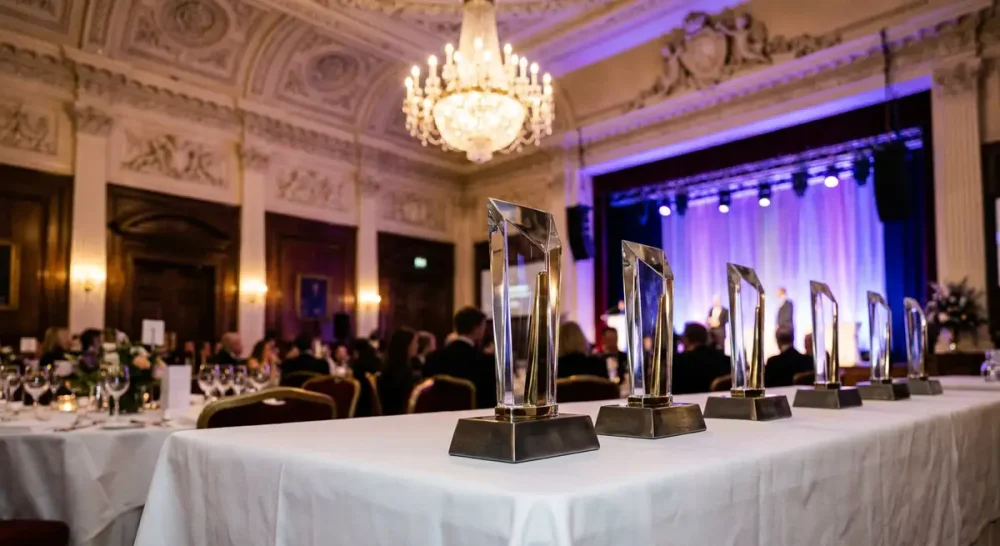
The ceremony, organised by TIGA, the trade association for UK video games developers, was held at Plaisterers’ Hall in the City of London on Wednesday 18 November, the night before Grand Theft Auto VI went on sale. The winners list stretched from blockbuster studios to small independents, specialist service firms and universities.
Dovetail’s big night
Chatham-based Dovetail Games, best known for its rail simulation series, took Best Educational, Serious or Simulation Game for Train Sim World 6. It also won Best Publisher and two awards for how it runs its business: Commitment to ESG and Commitment to Workplace Wellbeing. No other company won more, according to the full results published by TIGA.
Several other British companies went home with two awards. Playground Games, the studio behind the Forza Horizon series, was named Best Large Studio and also won Best In-House Recruitment and Talent Development. London indie developer SFB Games won Creativity in Games and Best Narrative for The Mermaid Mask, while services company Side took both Best Services Provider and Best QA and/or Localisation Provider.
Wales Interactive was named Best Small Studio and won the VR, AR, XR and MR category for Maid of Sker VR. In a post on its website, the studio said it was “over the moon” and described the double win as “more great recognition for the Wales Interactive team”, given the strength of the other nominees. It also thanked Creative Wales, the Welsh Government agency, “for their amazing support for the Games Industry in Wales”.
Game of the Year and the wider winners
007 First Light, the James Bond origin story developed by IO Interactive, the Danish studio behind the Hitman series, won Game of the Year in a category decided by a vote of those attending the ceremony.
Elsewhere in the games categories, Pearl Abyss’s Crimson Desert won Best Action and Adventure Game and Sony Interactive Entertainment’s Ghost of Yōtei took Best Visual Design. Slitherine’s Broken Arrow won Best Strategy Game, Supermassive Games’ Directive 8020 was named Best Social Game, and FuturLab’s Star Wars pack for PowerWash Simulator 2 won Best Use of a Licence. Sumo Digital and Secret Mode’s NUTMEG! won the Heritage in Games award, and the charity SpecialEffect’s OpenDrive won the Diversity award.
Ash Habib, chief executive of Steel City Interactive, received the Outstanding Leadership award. Associate Professor Mark Wickham of Norwich University of the Arts, who also advises TIGA on education, was named Outstanding Individual of the Year for his work in games education and his part in building links between universities and industry.
Dr Richard Wilson OBE, TIGA’s chief executive, said: “These awards recognise the talent and dedication involved in making outstanding games, building successful businesses and delivering excellence in games education.” He added: “Our winners demonstrate the breadth of excellence across the sector, from independent studios to major developers, specialist service providers and education institutions.”
Birmingham’s double for games education
Birmingham City University won both education prizes, Best Educational Institution and Best Education Initiative, for its Games Academy, which brings four game development disciplines together in one collaborative hub. The academy was set up after industry feedback called for graduates who can work across specialisms, as Birmingham Now reported.
Nathan Dewell, the university’s head of games and animation, said: “Myself and the team are incredibly proud to have picked up two awards, recognising the hard work that has gone into establishing the BCU Games Academy.” He added that game development technologies are increasingly being adopted in film and virtual production, healthcare and architecture, and that students are encouraged to explore how their skills could transfer to those industries.
What it means for UK readers
The awards are a reminder of how widely the games industry is spread across the country. This year’s winners came from Kent, the West Midlands, South Wales, Sheffield, Norwich and London, alongside international publishers whose games are played by millions of people in the UK.
The sector’s economic weight is increasingly part of political debate. On the same day as the ceremony, Welsh Conservative Paul Davies told the Senedd that Wales risked falling behind England and Scotland in attracting games investment, citing estimates from the Institute of Chartered Accountants in England and Wales that the industry contributes between £6 billion and £12 billion to the UK economy and supports around 73,000 jobs, according to Nation.Cymru. Culture minister Heledd Fychan replied that Creative Wales had invested more than £5.7 million in more than 100 games businesses since 2020.
For players, the list doubles as a guide to some of the year’s most acclaimed British-made work, from a hand-crafted indie story to one of the country’s longest-running simulation series.
What happens next
Attention now turns to the international awards season, with The Game Awards in December set to provide the next major test for many of this year’s releases. For the UK winners, the TIGA recognition is likely to feature in recruitment and publishing pitches in the months ahead, while the Welsh Government’s consultation on its culture and sport strategy, which Welsh games companies have been urged to respond to, remains open until 18 December.