

















Keir Starmer has entered the stay of execution phase of his premiership.
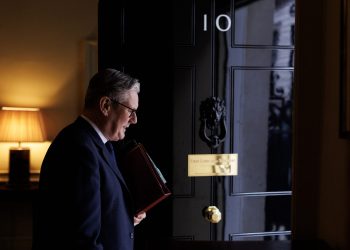
On Wednesday, the prime minister instructed Labour MPs to support a government amendment to a humble address tabled by Kemi Badenoch’s Conservative Party. The official opposition called for the release of documents relating to Peter Mandelson’s appointment as Britain’s ambassador to the US; Starmer sought to include exemptions for those papers that might prejudice national security and international relations.
The Parliamentary Labour Party (PLP) mutinied.
Having been marched up and down hills for months by a meandering Downing Street operation, Labour MPs looked elsewhere for guidance. It was left to Angela Rayner to locate a politically sustainable solution and dictate terms to the government Whips’ Office. Ministers agreed, under the threat of greater humiliation, to refer the documents to the cross-party intelligence and security committee.
The former deputy prime minister filled the PLP power vacuum on Wednesday.
The episode exposes just how thin Starmer’s grip on his parliamentary party has become.
Any prime minister’s fate rests with their parliamentary party. A finer appreciation of this fact might have spared Starmer some of his more spectacular misjudgments – the “noises off” on the backbenches matter. But a prime minister’s dependence on their party is never more apparent than at the end of the road.
On the steps of Downing Street in July 2022, Boris Johnson memorably described the irresistible synchronisation of regicidal MPs. When the herd moves, the outgoing prime minister observed, it moves. Johnson’s obstinate determination to cling to power was no match for the collective might of Conservative MPs.
Johnson attributed the “powerful” herd instinct to Westminster as a whole. But there is an argument to say that, when it comes to ejecting and electing leaders, this instinct is a uniquely Conservative asset.
Over 14 years of government, spanning five prime ministers, the Conservative Party’s leadership election rules were treated as an extension of the British constitution. The key distinction between the Tory rules, established in 1998, and those governing any challenge to Starmer lies in the former’s no-confidence procedure.
The Conservative no-confidence ballot is a ruthless, and highly sophisticated, mechanism.
In total, the 1922 committee of Conservative backbenchers has overseen three ‘votes of confidence’: Iain Duncan Smith in 2003, Theresa May in 2018 and Boris Johnson in 2022. Of these votes, only the first has been successful. A total of 90 Conservative MPs voted against Duncan Smith in the standard secret ballot; the outgoing Tory leader could only muster 75 to his defence.
The 2018 and 2022 ballots technically secured the position of May and Johnson respectively. When a leader survives a confidence vote, they are rewarded with a 12-month clemency period. In practice, both May and Johnson were defenestrated mere months later. (Johnson, at least, was warned that the 1922 executive committee would pass a rule change to force a second confidence vote.)
The power of the no-confidence mechanism is that it creates a leadership vacancy. This means that Conservative MPs, who see the incumbent leader as a liability, do not need to resolve on a common path forward – only that the incumbent should go. The defenestrated leader, to round off the ruthless process, is then barred from standing in the subsequent leadership election.
The mechanism has its drawbacks, of course. Creating a vacancy without charting a clear course can produce some unforeseen and unfortunate outcomes – including but not limited to sending Liz Truss to Downing Street. But the Conservative no-confidence ballot remains a precise, and mostly orderly, way of translating mass disaffection into a leadership challenge.
Labour’s system is significantly less precise.
In the event of a vacancy, as we saw with the mostly smooth competition to replace Angela Rayner as deputy leader, the rules are simple enough. But Labour lacks its own in-house assassination bureau; there is no reliable production line of “men in grey suits” who can coordinate a lethal visitation while an incumbent remains in place.
Critically, there is no procedural means of creating a Labour leadership vacancy. In 2016, a PLP motion expressing no confidence in Jeremy Corbyn, tabled by Margaret Hodge, was passed by 171 votes to 40. But there was no obligation for Corbyn to stand down. Instead, both Owen Smith and Angela Eagle declared their leadership candidacies and easily surpassed the 20% threshold (then 50 MPs) to trigger a contest. Corbyn was given a place on the ballot following an 18-14 National Executive Committee (NEC) ruling. And the membership vote restored Corbyn as leader with a refreshed mandate.
According to the Labour rule book, it remains the case that a vacancy can only be created by a resignation. Pretenders cannot exploit a vacuum; they must wrestle the crown from the king’s head while he remains on the throne.
Conservative leaders are felled by a politically amorphous, technically anonymous herd of critics. Keir Starmer’s usurper will have a name, a faction and a wider group of allies – all of whom must make themselves known under party rules. Labour MPs cannot cower in smoke-filled rooms or behind secret letters to a senior backbencher. In this regard, the Labour rule book is plain: “Valid nominations shall be published by the party”.
The rule book, however, is sufficiently ambiguous to allow a challenger to choose the sequencing of their insurrection. The rules suggest that a challenger should surreptitiously sign up a fifth of the PLP (81 MPs) to a coup, before providing the proof of their nominations to the general secretary of the Labour Party, Hollie Ridley. But on a reasonable reading of the rules, an MP could declare their intention to run, and then begin canvassing the parliamentary party.
And yet, whatever approach a would-be challenger takes, they will be forced to place their head above the parapet.
A potential parallel is found in the Conservative Party rules as they existed from 1975 to 1998. Then, as now in the Labour Party, the removal of an incumbent leader required a full frontal assault from a prospective challenger. Margaret Thatcher avoided a challenge under these rules for much of her tenure as Tory leader and prime minister. But she faced two contests successively in 1989 and 1990.
In 1989, Sir Anthony Meyer stepped forward as a “stalking horse” candidate. Thatcher secured a mostly decisive victory over “Sir Anthony Whats’isname” or the “stalking donkey”, as Meyer was dubbed by some in the press, by 314 votes to 33. On that occasion, a serious challenger to Thatcher, such as the former defence secretary, Michael Heseltine, chose not to stand. Meyer stood to test the party’s confidence in the prime minister.
One year later in 1990, in the wake of Geoffrey Howe’s searing resignation statement, Heseltine announced his candidacy for the leadership. Under the party’s then leadership rules, a candidate required a majority of 15% of the total Tory selectorate to win outright on the first ballot. Thatcher’s majority was four short of this threshold; she responded by announcing her resignation as prime minister.
But Heseltine’s candidacy famously established the dictum that knife-wielders do not go on to collect the crown. Both John Major and Douglas Hurd put themselves forward for the second ballot, and the former prevailed.
Those considering a challenge to Starmer’s leadership will be acutely aware of this precedent. There are countervailing case studies, of course – examples of would-be candidates missing their moment of maximum opportunity to wait for a cleaner opening that never arrived. Michael Portillo installed telephone lines in 1995, but did not challenge Major; David Miliband chose not to lead an insurrection against Gordon Brown. Both pretenders lost subsequent leadership elections.
Another option for those dissatisfied with Starmer’s leadership would be a symbolic stand, signalling to the prime minister that his time is up. Historically, this is the route the Labour Party has taken when a leader is perceived to be a liability.
An ideal model is supplied by the Blair-Brown leadership transition. On 5 September 2006, 17 Labour MPs issued a letter asking Blair to resign – reports indicated that dozens more were willing to support the call. A coordinated move by Brown’s allies followed, including the resignation of several junior government ministers. Tom Watson, the future Labour deputy leader, was among those to step down. Blair was forced to announce that the party’s upcoming conference would be his last. On 25 September, at the scene of Blair’s final conference, Brown declared his candidacy for the leadership.
Crucially, the relative precision of Blair’s defenestration owed to Brown’s status as his obvious successor (notwithstanding an ill-fated challenge by John McDonnell).
Recent coups have not been so successful. In June 2009, just minutes after the polls had closed in the European and local elections, James Purnell resigned as work and pensions secretary and called on Gordon Brown to step down as prime minister. Purnell, who insisted that he would not seek Brown’s post were it to become vacant, was joined by backbench MPs Barry Sheerman and Graham Allen in calling on Brown to resign. But Miliband, the foreign secretary, and Alan Johnson, the health secretary – Brown’s most likely heirs – rowed in behind the Downing Street incumbent. Purnell’s putsch failed.
In January 2010, two former cabinet ministers, Patricia Hewitt and Geoff Hoon, called for a leadership contest to resolve Brown’s future. The prime minister dismissed the challenge as a “form of silliness” – and the Parliamentary Labour Party agreed. Interestingly, the Hewitt-Hoon coup called for a secret ballot vote in Brown’s leadership, replicating the Conservative no-confidence procedure. Both Johnson and Miliband (eventually) signalled their support for the prime minister.
The 2016 Labour leadership election was the ill-fated consequence of a failed coup, triggered by the dismissal of Hilary Benn as shadow foreign secretary for plotting. Benn’s sacking in the early hours of the morning opened the floodgates to a wave of resignations from the shadow frontbench, precipitating the symbolic no-confidence vote in Corbyn’s leadership. The incumbent stayed put.
At this moment, Starmer is likely more vulnerable than either Brown or Corbyn. In the former case, discontent was more diffuse with a general election nearing; in the latter instance, Starmer does not command the confidence of the grassroots in the way Corbyn did. A symbolic intervention could well be enough to depose Starmer.
But such a stand would have to be fronted by a politician with sufficient political clout – a party grandee or shadow cabinet minister – to signal decisively that Starmer’s time is up. Moreover, if the prime minister refuses to resign, this strategy would still depend on his prospective successors stepping forward to announce their candidacies. They would need to have full faith that their parliamentary colleagues would go over the top with them.
It is likely, therefore, that in the absence of a resignation, the Labour herd will be forced to get creative in order to drive Starmer from office.
The prime minister is also protected, for the time being, by the absence of an agreed successor. Andy Burnham was only recently barred from marching on Westminster by the Labour National Executive Committee (NEC). In September 2025, Angela Rayner resigned from the government over her tax affairs. Wes Streeting is seen as a plotter by Starmer’s allies and with scepticism from the Labour “soft left”. Ed Miliband, the Labour leader from 2010 to 2015, has previously been rejected by the electorate. Shabana Mahmood, the most Blue Labour-coded of the likely contenders, would surely struggle among the party membership.
The Conservative herd moved against Theresa May, Boris Johnson and Liz Truss, in part, because the parliamentary party could conceive of a line of succession. (The choice of Conservative MPs to succeed Johnson was, of course, Rishi Sunak, not Truss.)
The bottom line is that Starmer’s position is terminally vulnerable, but protected by a combination of process and political circumstance.
In July 2022, Johnson referred to his party’s “brilliant Darwinian system”. Labour simply lacks a reliable apparatus for regicide. And so the relative ease with which the Conservatives ditched leaders will not be repeated under Labour. The process will not be precise, and it will almost certainly not be orderly. When Starmer is finally felled, the fallout will be fraught.
The length of Starmer’s stay of execution lies with the Labour herd. The prime minister is only in a position to endure. In the meantime, the destabilising phoney war and the leadership brinkmanship will continue until a future flashpoint. This could be provided by the Gorton and Denton by-election and/or the elections in May.
If Starmer is to go, then at some point, in some way, someone – be they a leadership contender or disgruntled grandee – will have to step forward.
Josh Self is editor of Politics.co.uk, follow him on Bluesky here and X here.
Politics.co.uk is the UK’s leading digital-only political website. Subscribe to our daily newsletter for all the latest news and analysis.
The post Starmer leadership crisis will test the Labour herd appeared first on Politics.co.uk.