









The Scout Association has warned that England’s proposed tourist tax could cost the youth movement around £1m a year, and has called on ministers to write a nationwide exemption for youth groups into the legislation rather than leaving the decision to local mayors.
The charity says the overnight visitor levy, which would let mayors and strategic authorities add a charge to the price of accommodation including campsites, risks pricing some children out of camps and residential trips. It also fears unpaid volunteers would be left to collect the tax and file returns.
The intervention, made public on Saturday, adds to pressure on the government over the Visitor Levy (England) Bill, which was debated in the Commons earlier this week and has already drawn criticism from a Labour backbencher.
How the Scouts reached £1m
The Scout Association’s estimate rests on a single assumption: that a 5% levy is applied to every overnight stay across its sections. The movement records 1,423,344 nights away each year across Squirrels, Beavers, Cubs, Scouts, Explorers and adult volunteers. On that basis, the charity puts the annual cost at about £1.04m, according to the BBC.
The 5% figure is not set in law. Labour’s regional mayors have signalled that they would cap the charge at that level, but the bill itself contains no maximum rate, meaning the bill for youth groups could be higher in areas that choose a steeper levy.
Girlguiding, which also runs camps and residential activities, would be covered by the levy too.
Chief Scout Dwayne Fields said the organisation backed investment in local communities and that “well-crafted legislation can unlock that opportunity”. He added: “But we are firmly opposed to any proposal that would see local mayors tax Scouts and other voluntary youth organisations for camping trips that equip young people with skills for life, while burdening volunteers with the role of unpaid government tax collectors.”
A ‘tent tax’ on one Greater Manchester site
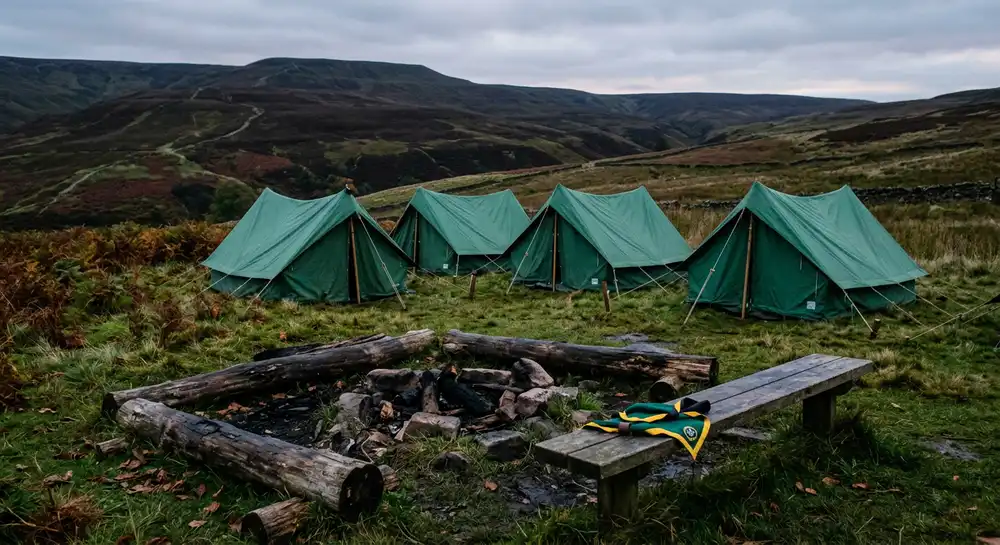
The charity has pointed to Linnet Clough, a Scout campsite near Stockport in Greater Manchester, to show how the charge might work on the ground. Around 25,000 nights are spent at the site each year.
Chris Taylor, lead volunteer for Greater Manchester East Scouts, told the BBC that a 5% levy would add more than £11,000 a year to the cost of camps and sleepovers there. He said the charity would also need to employ someone to collect the money and submit returns, which he estimated at a further £7,000 a year for that one site. Greater Manchester East Scouts has put the collection cost at more than £6,700, the Manchester Evening News reported.
“This new tent tax is madness,” Mr Taylor said.
The example carries political weight: the Prime Minister, Andy Burnham, led Greater Manchester as mayor, and the levy is closely associated with him.
What ministers have said
The government’s position is that exemptions should be decided locally. The Ministry of Housing, Communities and Local Government said leaders who introduce the levy “will have the option to exempt certain types of accommodation in their areas, including accommodation which is often used for trips by youth groups like Scouts and Girl Guides – such as camping pitches”. It said the money raised would “stay local” and be spent on the visitor experience and local growth, including high streets, parks and events.
When MPs pressed the Communities Secretary, Angela Rayner, during the bill’s Commons debate, she said local leaders “will be able to make exemptions” and that the government expected them to weigh the needs of groups including medical visitors, disabled visitors and children. Devolution minister Sally Jameson told MPs that strategic authorities could exempt “lower-cost accommodation that is commonly used for educational trips and groups such as Scouts and Squirrels”, the Independent reported.
In a written parliamentary answer earlier this month, the government said national exemptions would apply only to temporary accommodation, council-run shelters and refuges, with camping pitches, hostels and dormitory-style accommodation left as optional local exemptions.
The Scout Association argues that this produces a postcode lottery: whether a family pays more for a child’s camp would depend on which authority the campsite falls under.
Gareth Snell, the Labour MP for Stoke-on-Trent Central, who raised the issue in the Commons, said Scout camps “might be the only time” some young people spend nights away from home. “While mayors may choose to take these venues and activities out of any levy they may raise, the easiest and fairest way to ensure that those camps are excluded from any levy is to write it into the Bill,” he said.
What it means for UK readers
For most households, the levy would show up as a small addition to hotel, B&B or holiday let bills in areas that choose to adopt it. For families with children in Scouting or Guiding, the effect is more direct: camp fees are usually set to cover costs, so any new charge is likely to be passed on to parents.
The contrast with Wales is likely to sharpen the debate. The Welsh Government has already said young people staying in hostels, campsites and outdoor centres will be exempt from its own tourism tax, which is due to take effect next year. Scotland’s councils have powers to set their own visitor levies under separate legislation.
What happens next
The bill will now move to its committee and report stages. Mr Snell has already told MPs that, if the government cannot find a way to exempt Scouts, he will table an amendment at report stage and, if necessary, force a vote on it.
Any levy would still need to be adopted by individual mayors or authorities after the bill becomes law, so no Scout camp in England faces the charge yet. The question for ministers is whether to hold the line on local discretion or concede a national carve-out before a Labour rebellion builds.