

















There is a particular kind of panic that takes hold in British politics roughly a year into a Parliament. It is the panic of people who have discovered that governing is harder than campaigning, and begun to wonder whether the problem might be the person at the top. We are there again now, and the familiar rituals are playing out. The whispers about leadership, the anxious briefings, the suggestion that perhaps a change of face might steady the ship.
While I write as a lifelong Labour supporter, I am also someone who has spent enough time around politics to recognise the moment for what it is: the sound of a governing party forgetting the timescale on which democracies are supposed to work.
The British public elected Keir Starmer as prime minister in July 2024. Nobody else. That was the offer put to voters, and that was the verdict returned. Parliaments are elected for five years, not sixteen months, and the growing habit of treating the early phase of a government as some sort of rolling audition does a disservice to leaders and the electorate itself. We do not lend out the keys to the country on a provisional basis, subject to review at the first sign of turbulence.
Much of the recent agitation has been dressed up as concern about standards. The cases involving Angela Rayner and Peter Mandelson are cited as evidence that Labour is in trouble, or that it lacks grip. I see them rather differently. What we have witnessed is the operation of higher ethical expectations – expectations that have become unfamiliar after a decade in which standards were ben or sometimes ignored altogether.
Angela Rayner stepped aside after scrutiny concluded that she had fallen short. That is not comfortable for any politician, and it is not painless for a government. But it is what accountability looks like when it is taken seriously. In an era when ethical difficulty was often met with denial or distraction, that difference matters.
The same applies to the handling of senior figures whose presence becomes a distraction to the work of government. The point is not that ministers are saints, or that controversies will never arise. It is that, when they do, standards still bite. Politics has grown so accustomed to moral elasticity that the enforcement of rules can look like self harm. In fact, it is a sign of institutional health.
This needs to be set against a broader truth Westminster is particularly bad at remembering: early unpopularity is not a historical verdict. British political history is littered with leaders who looked fragile or embattled in the early stages of a parliament and were later judged by what they delivered, not by how confidently they filled the space. Harold Wilson governed initially with a thin mandate before securing a stronger one. John Major was never loved, yet he governed a full term. Clement Attlee’s government got on with building institutions that still shape our lives, rather than anxiously checking the mood of the press gallery.
We do not write the history of a government at the sixteen-month mark. We write it at the five-year point, when the accumulated effects of policy and competence can be measured against the promises made. The idea that Labour should now be speculating about leadership change betrays a worrying loss of nerve.
This matters not because Keir Starmer is beyond criticism – no prime minister ever is – but because the alternative is worse. We have just lived through a period in which the Conservative Party treated leadership as a revolving door, churning through prime ministers in the hope that novelty might substitute for coherence. Internal drama consumed energy, confused the public, crowded out delivery, and the electorate noticed.
Labour was elected to offer something different: stability and the slow, often unglamorous work of making the country function better. That project has barely begun. To weaken it now through internal panic would be less an act of renewal than of forgetfulness – a failure to remember what power is for, and how rarely the centre left is entrusted with it.
Away from the Westminster noise, the government’s record so far looks rather different from the caricature sketched by its critics, who would prefer a story of fireworks or instant transformation. What they have, instead, is a story of steadiness returning to systems that had grown used to lurching from one shock to another.
Start with the economy. The most important economic achievement of the past year has been almost invisible: the absence of drama. After a period in which fiscal announcements were capable of unsettling markets within hours, that calm matters. The most recent budget did not thrill anyone. It was not designed to. It asked households and businesses to contribute a little more, redistributed resources towards those under the greatest pressure, and did so without provoking the sort of market convulsions that have become a byword for recent British mismanagement. As the government itself has argued, that kind of boring credibility is a precondition for everything else it wants to do.
Alongside this, the direction of travel on inward investment has been quietly positive. Ministers point to commitments in financial services, advanced manufacturing and, increasingly, artificial intelligence and data infrastructure. None of this will transform living standards overnight, but it suggests that international capital has not lost faith in the UK as a place to do business.
Immigration is a harder and more emotionally charged test. It is also an area where rhetoric has too often floated free of reality. Official figures suggest that net migration has fallen sharply from recent peaks. The government would be unwise to claim victory: pressures remain intense, and public concern has not evaporated. But it is no longer credible to argue that nothing has changed. The numbers tell a more complicated story – one of tightening rules and an attempt to regain control of a system that had plainly drifted.
On small boats, asylum accommodation and removals, the picture is similarly mixed. Ministers talk of determination and long term plans rather than instant fixes, and that is probably wise. But what can reasonably be said is that immigration policy has shifted from symbolic outrage to administrative seriousness. That change deserves time to bed in.
The NHS remains the most emotionally resonant measure of whether government is delivering. Here, too, expectations must be managed carefully. No serious observer would claim that the service has been ‘fixed’. What can be said, on the basis of published data, is that some indicators have stabilised and that there are early signs of improvement in areas such as waiting list management and appointment access. This is slow, painstaking work in a system under immense strain. But after years of apparent decline, even modest progress matters – provided it is sustained.
Taken together, these are hardly the achievements of a government in freefall. Rather, they are the beginnings of a record that will only make sense when viewed as a whole. That is precisely why the obsession with leadership speculation is so damaging. It shifts attention away from delivery and towards theatre, rewarding the loudest voices instead of the most effective ones.
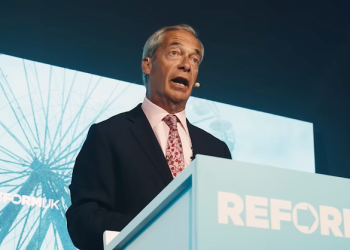
That danger is sharpened by the political context in which Labour now operates. On the right, Reform has demonstrated a knack for communication that should not be underestimated. Its messages are simple and emotionally charged. Panic inside Labour is a gift to such movements, confirming their claim that politics is all chaos and incompetence.
On the left, the Greens present a different kind of challenge. Their appeal is rooted more in idealism, and in a willingness to articulate positions that sit well outside Labour’s centre left project. Labour’s offer is a hybrid of market economics and social obligation: capitalism tempered by a sense of collective responsibility. It is not a protest movement, and it cannot govern as one.
All this places a responsibility on Labour MPs that is easy to describe and harder to practise. Their task now is to make the case – patiently and persistently – for what a centre left government is actually doing in power, not to scan the horizon for leadership alternatives. That panic narrows debate at precisely the moment when clarity is required.
Centre left governments are rare in British politics, and they are rarely comfortable. They attempt to reconcile market economics with a social conscience, efficiency with fairness, growth with restraint. When they falter, the temptation is to look inward. More often, that simply postpones the real work.
Labour was not elected to provide a running commentary on its own anxieties. It was elected to govern. Governments are not auditions. They are responsibilities, measured over years, not weeks. And the grown up response to the pressures of office is patience and the confidence to finish the job that was begun.
Kevin Craig is the CEO and Founder of PLMR. He was a Labour Party candidate at the 2024 General Election.
The post The rush to panic tells us more about Westminster than Starmer appeared first on Politics.co.uk.