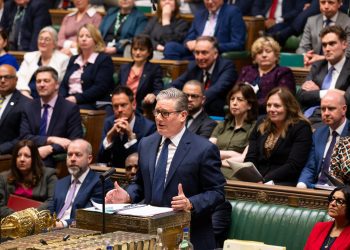



















“Summer is definitely over”, exhaled a self-assured sounding Keir Starmer on Monday. The prime minister had just kicked off the new parliamentary term with a relatively wholesale rejig of his Downing Street operation.
A new “chief secretary to the prime minister” post was created; Darren Jones, rated in Downing Street, was poached from the Treasury to fill it. The changes were said to symbolise a new dawn for the government: Starmer heralded the arrival of “phase two”, which his team would embrace “in good spirits… and with conviction”.
Starmer’s “summer is definitely over” line sounded like a plea as much as a promise — recent weeks had been dominated politically by Reform UK and Nigel Farage. Reform’s relentless summer activism, of course, followed the travails of spring. The No 10 shake-up was designed to remedy the organisational failings that delivered the winter fuel and welfare debacles. A line was being drawn. Delivery, and a “just f*cking do it” attitude, would now infuse the government.
The reshuffle was about re-establishing control, therefore: of policy (particularly that handed down from the Treasury) and of the political narrative.
The loss of Angela Rayner is deeply damaging for manifold reasons. But its immediate political potency derives from how the episode jars, and will continue to jar, with the message Starmer sought to send this week.
On Wednesday, Rayner referred herself to the prime minister’s ethics adviser after she admitted underpaying stamp duty on her £800,000 flat. On Friday, Rayner’s fate was sealed with Sir Laurie’s letter. She behaved with “integrity” and a “commitment to public service”. But the ministerial code had been breached.
Rayner left three jobs in her wake: deputy prime minister, deputy Labour leader and housing, communities and local government secretary. Starmer, not wanting to let this worthy crisis go to waste, whipped out the Downing Street whiteboard and set about filling them. The finality of a reshuffle, the purest manifestation of a PM’s patronage powers, means a ministerial resignation can be seized upon as an opportunity. Changes planned for the autumn were expedited by events.
***Politics.co.uk is the UK’s leading digital-only political website. Subscribe to our daily newsletter for all the latest news and analysis.***
The appointment of Shabana Mahmood as home secretary was a statement of intent. In fact, the reshuffle seemed almost entirely geared to enable Mahmood’s elevation. Making way was Yvette Cooper, who found herself shunted into the Foreign Office. David Lammy was duly appeased with the deputy prime ministership.
The similarities to previous reshuffles are instructive. Lammy follows in the footsteps of one Dominic Raab, the first senior minister to have his fall from the Foreign Office cushioned with the deputy PM post. Cooper’s switch to the Foreign Office mirrors James Cleverly’s move in the opposite direction in November 2023 under Rishi Sunak as PM. Cooper and Cleverly, it is implied, would not have accepted anything less. Nor were Sunak and Starmer strong enough politically to offer it.
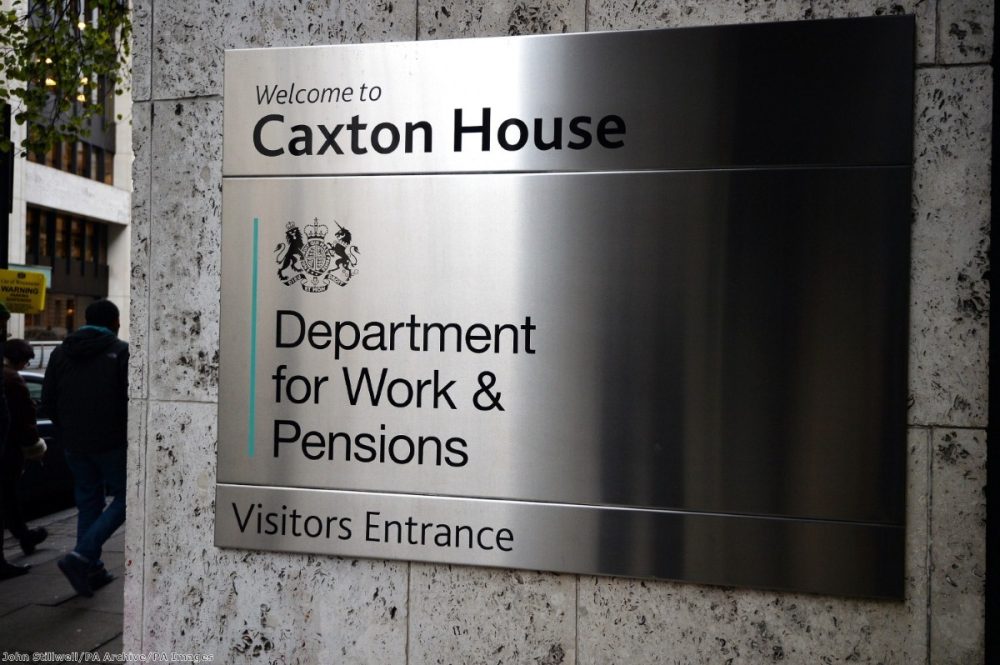
Elsewhere, Douglas Alexander’s was an appointment waiting to happen. Pat McFadden’s move to the Department for Work and Pensions mirrored Mahmood’s: well-regarded ministers taking on problematic briefs deemed crucial to the government’s success.
Meanwhile, the ministerial moves massaged Nigel Farage and Reform party conference out of the news cycle (for now). Given the circumstances, it was a well-managed, balanced reshuffle. There was little bloodshed in the end, but the changes represented a coherent restatement of the government’s priorities. There was meaning behind the musical chairs: a tune the government can dance to.
That, ultimately, is why the coming Labour deputy leadership contest looks set to be so punishing. Rayner was replaced in her erstwhile ministerial capacities with relative ease. The same cannot be said of her elected role as deputy leader. Starmer’s sorrow over the departure of his deputy, expressed in a handwritten letter, was surely compounded by his recognition of the tumult to come.
Labour’s rules require an election — that points to an unavoidable, protracted and potentially bitter internal debate. Labour Party conference, ever seized upon by embattled leaders as a political chrysalis chamber, will be reimagined as a beauty contest for deputy leadership contenders: a festival of in-fighting and recrimination. The prime minister is powerless to prevent it.
With the stakes high and the audience narrow, the internal debate will not guide the candidates towards Starmer — but away from him. Expect the grievances and frustrations of the Labour activist soul to be eagerly echoed by the cast of deputy leadership candidates.
One reason why Starmer is prime minister is because his team, led by Morgan McSweeney, understood the first rule of leadership elections: the membership is a more ideologically maximalist collective than the party establishment. In the 2020 Labour leadership contest, Starmer pitched to the progressive soul. Now, combine this dynamic with an emergent “mid-term” effect — which could invite restless activists to inflict a critic on the incumbent prime minister.
A civil war is about to begin, while the king remains on the throne.
As such, we are entering a period of radical uncertainty. The last seven deputy leadership contests (2020, 2015, 2007, 1994, 1992, 1988 and 1983) have been run alongside a leadership contest. But what we do know points to a difficult time indeed for the prime minister. The brutal 1981 deputy leadership contest is a portentous precedent.
***Politics.co.uk is the UK’s leading digital-only political website. Subscribe to our daily newsletter for all the latest news and analysis.***
Labour deputy leadership election: the campaign
For Keir Starmer, the political damage will unfold in three acts: the public deputy leadership campaign, the result, and the potential reality of a new deputy with a mandate to challenge him.
Under the current rules, rewritten in 2021, deputy leadership candidates must receive a nomination to stand from 20% of their fellow Labour MPs. That means they must first amass the support of 80 colleagues. Then, they must secure a nomination from 5% of local Labour party branches, as well as three affiliates of the party — at least two of which must be trade unions. The final decision is made by the members.
The initial bar is the tallest. But a critic of Starmer could still vault it. The reasoned amendment to the government’s flagship welfare bill was signed by over 120 Labour MPs. A full 49 Labour MPs voted against the proposed legislation (though there have been some suspensions since).
In this regard, it is the Labour “soft left” that has most to gain from a deputy leadership contest. And there is no shortage of potential standard-bearers. The race’s dividing lines and dynamics will benefit a candidate who can stress their independence from the leadership: individuals such as Anneliese Dodds, Louise Haigh, Rosena Allin-Khan, Emily Thornberry or Sarah Owen, who have had run-ins with Starmer since 2020, appear well-positioned. Indeed, a candidate’s performance could well relate inversely to their proximity to project Starmer.
The race also has interesting implications for collective responsibility. We are in uncharted territory, and a key outstanding question relates to how the frontbench will engage in the contest. It would be politically impossible for Starmer to endorse a candidate. But the wider ministerial ranks will presumably participate, either as candidates or as supporters. Will there be a de facto representative of the government in the contest? Who would take on this mantle in a contest where perceived loyalty is likely to be a liability? What, then, if the contest ventures into open criticism of the government and ministers are implicated, if only by association?
Labour deputy leadership election: the result
At this stage, it is difficult to avoid the conclusion that the membership is about to stick a thorn directly into Starmer’s side.
Once in post, the prime minister would face a dilemma about what, if any government role, to offer his deputy. To be sure: Starmer will not be obliged to find a post for the winner of the coming contest. But having a senior critic with a mandate of their own positioned outside the government tent could prove immensely problematic.
Despite its lack of official power, the deputy leadership is more than merely “ceremonial”. The role combines relative seniority and freedom: an attractive formula for any politician. The tenures of recent deputy leaders — Rayner, Tom Watson, Harriet Harman and John Prescott — reflect how the incumbent can shape the bounds of their office and their place in the party. It is little surprise the role is highly coveted. In 2020, six candidates ran for the position; in 2015 it was seven; in 2007 it was six again.
Rayner’s parallel mandate made her, on various occasions, a powerful ally and critic of the prime minister. Generally, she operated as a bridge between the leadership and the wider party — a powerful spokesperson for both camps. Starmer will recognise that he has lost a proven and skilled communicator, who possessed a unique ability to promote his policies among the party.
Rayner helped shield Starmer. Her successor, we can reasonably assume, will be closer to the activist conscience than the leadership.
***Politics.co.uk is the UK’s leading digital-only political website. Subscribe to our daily newsletter for all the latest news and analysis.***
Labour deputy leadership election: what next?
A potentially useful starting point in understanding how Rayner’s successor could operate is provided by — and bear with me here — Tim Farron in the 2010-2015 parliament.
Farron was elected as the Liberal Democrat president (effectively its party chair) in September 2010 by the membership, mere months after Nick Clegg and David Cameron addressed the Downing Street Rose Garden as coalition partners. Farron, a stalwart of the party’s left, made no secret of the fact that he never much liked being hitched to the Conservatives.
The nature of Farron’s elected office, combined with his palpable ambition, created a deeply uneasy dynamic. A backbencher throughout the coalition years, he used his role to position himself as the voice of activists — and Clegg’s likely successor. For Farron, it was a fruitful approach.
Labour’s next deputy leader, endorsed by at least 80 of their colleagues and the party membership, could perform a similar role. After all, Starmer’s new partner could make his sometimes tense relationship with Rayner look politically blissful.
This would all be punishing for the prime minister. That is plain. But it’s worth spelling out exactly why.
First of all, an activist-aligned deputy leader could serve to undermine Starmerism’s foundational narrative: specifically, that the prime minister sits atop a changed Labour Party. The deputy leader’s very presence, in these terms, would represent a challenge to Starmer’s political grounding and authority.
Secondly, in both the short and long terms, the drama generated by the deputy leadership vacancy will inevitably distract from Starmer’s focus on “delivery”. Labour is about to spend the autumn holding a mirror up to its own divisions — just as the government had hoped to pivot definitely to the country.
Starmer began the week projecting control. His recent reshuffling suggests he understands the perilous position Labour is in. But now he must spectate as deputy leadership candidates put his premiership on trial. Expect a pretty comprehensive cross-examination of the government’s perceived failings.
The prime minister’s definitive declaration on Monday that “Summer is… over” contained within it a nascent sense of hope, of purpose even. Today, that same phrase can only be read with a grim foreboding.
Josh Self is editor of Politics.co.uk, follow him on Bluesky here and X here.
Politics.co.uk is the UK’s leading digital-only political website. Subscribe to our daily newsletter for all the latest news and analysis.
The post Week-in-Review: Starmer has every reason to fear a deputy leadership election appeared first on Politics.co.uk.