

















(Representative) Vadodara, dated 3
The year 2026 is going to be a memorable one for astronomy lovers and science enthusiasts. Today, Saturday, January 3, a rare astronomical phenomenon will be seen in space. On this day, the first full moon of the year, the Wolf Moon, will shine in the night sky and also bring the Earth closest to the Sun.
The first full moon in January is known as the Wolf Moon in Western countries and in astronomy. There is an interesting history behind this name. In ancient times, the sound of wolves in search of food in the Northern Hemisphere was heard more at night during the bitter cold of winter. For this reason, Poonam of January was named Wolf Moon. As the moon is relatively close to Earth this night, it will appear larger and brighter than usual. If the sky is clear, this amazing sight can be seen with the naked eye even without a telescope. In addition to the Wolf Moon, another important geologic event will occur on the night of January 3. At 10:45 PM IST, the Earth will reach its closest approach to the Sun as it rotates in its orbit. In the language of science this position is called perihelion. At this time, the distance between the Earth and the Sun will decrease to approximately 147,099,894 kilometers. During perihelion the rotation speed of the earth will be the fastest i.e. 30.27 kilometers per second. The opposite position is aphelion when the Earth is farthest from the Sun. Which will happen on July 6, 2026.
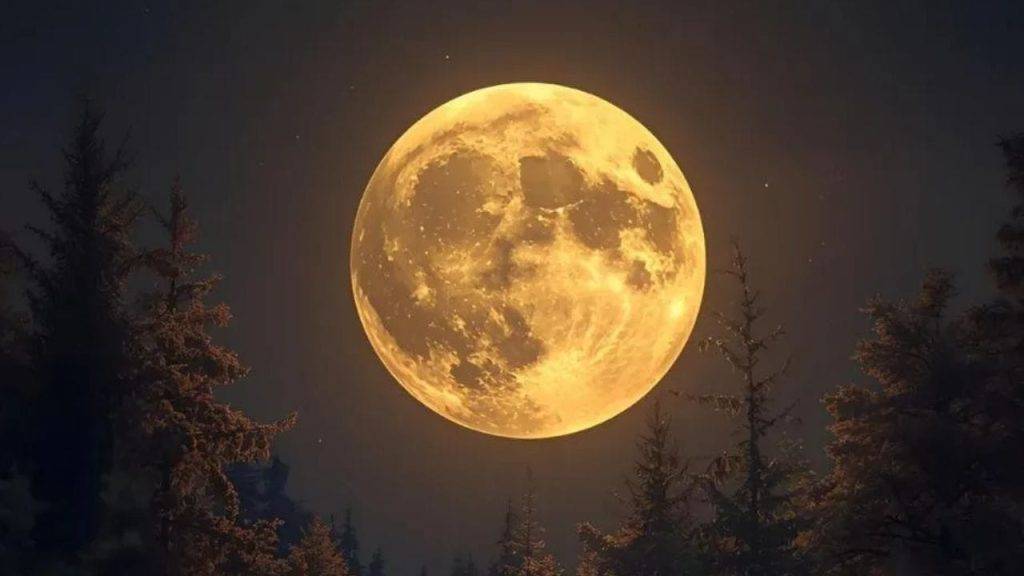
Due to the Super Moon, there will be a possibility of very high tides in the sea:
Today's Poshi Poonam is a super moon in the moon, on the first date the moon was very close to the earth and today the Purnima has come very close to the moon on the rising day of Mata Amba. This makes it appear brighter and larger than usual. Due to the super moon, there will be a possibility of very high tides in the sea. Therefore, it is very important for fishermen to be careful while plowing the sea. Another important thing is that today the earth is very close to the sun. Only 14.7 million kilometers away, the Sun will also appear 3% larger and 7% brighter to us. Even though the sun is closer we will be cold there because our northern hemisphere is tilted away from the sun. So there is a high possibility of remaining cold for 15 to 20 days. :
Divya Darshan Purohit, Astronomer, Gurudev Observatory